Generic selectors
Exact matches only
Search in title
Search in content
Post Type Selectors

Level up your fitness journey with MuscleBlaze

MUSCLEBLAZE

Why You Work Harder and Still Have Fat

If it had been about effort to lose fat, there would be walking success stories at most of the gyms. After all, there are plenty of individuals who train continuously, work hard each time, and get home looking as if they were a survivor of a disaster. But when one is half-way through the exercise, strength falls, energy diminishes and it all seems heavier than it was supposed to. This is when a person gets frustrated. The first thought that comes to mind is to work out more. But this is not a logic that the body works on.

The Problem with Sweat and the Results.

Sweat has become fitness money somehow. The drier you are the worse the exercise must have been. Exhaustion is accepted as evidence of fat loss as though fatigue itself is the objective.

As a matter of fact, sweat is simply a cooling mechanism on your body at work. It informs you that you have increased your temperature. It never tells you what you burnt, the efficiency of the energy generation or even whether fat was ever involved at all.

In case sweat was a sure way of losing weight, sitting in a sauna would beat most exercise programs. It does not. It only leaves you thirsty and pretentious. Fat loss occurs silently, within the cell.

Why Hard Work Still Feels Heavy

  • Muscles are practical. They are not responsive to motivation, discipline and inspirational playlists. They respond to energy.
  • A muscle that is contracting requires fuel instantly. Unless that kind of fuel is delivered in the right form at the right time, performance goes down.
  • The stored energy and the usable energy are not equal. It is not beneficial to have fuel in the warehouse when the delivery trucks do not appear at all.
  • Therefore, when exercises no longer feel good despite healthy habits and intensive use, the problem is hardly effort. It is logistics.

The Step Most Fat-Loss Advice Slips Silently Past

Fat does not transport itself out of storage to muscle and automatically transforms itself into energy. It follows a process. Fat cells should release fat, which should be carried to the bloodstream, into the mitochondria and converted to useful energy.

The mitochondria are the motors within your cells. Unless fatty acids can get to them, you can not burn fat no matter how much of it you store. This is the step so many are confused at and so most fat-loss advice becomes particularly silent at this stage.

This is where L-Carnitine comes in the picture.
What L-Carnitine Does?

hat L-Carnitine Does?

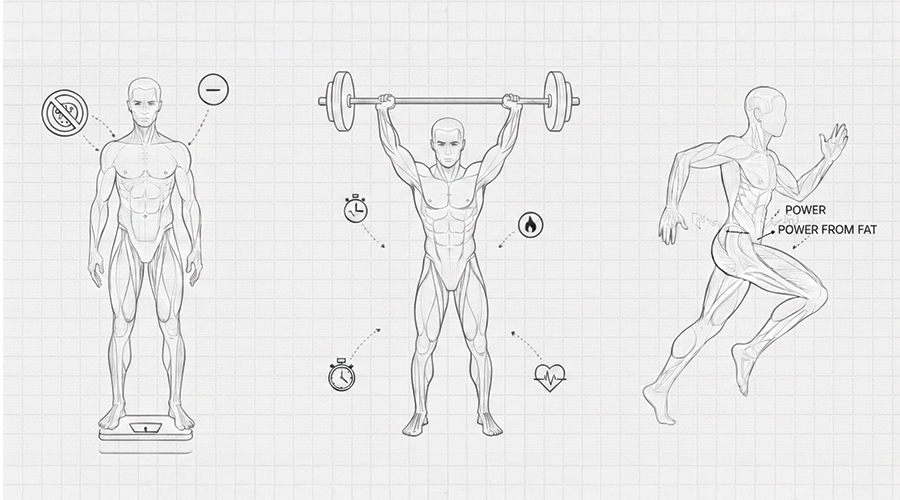
L-Carnitine is not a stimulant, a miracle to melt fat, or a substitute to working out. Its business is much more practical. It assists in delivery of fatty acids to the mitochondria where they are utilized to generate energy.

The Whole Job is Just That

It does not force fat loss. It just helps stored fuel to be converted into usable fuel. And when that occurs, then many of the problems are solved.

What Changes When Fat Begins to do Its Job

When fat is used in the right way, the exercises stop being a bargain. Strength holds longer. Power seems more stable than rising and falling. Fatigue comes later, when some useful work has been performed.

The appetite changes too. Not because hunger has been bullied to shut up but because the body is now feeling fed. Constant energy minimizes the food noise. 

Why L-Carnitine Is Not a Just a Fad

The use of L-Carnitine is long-term. The role of it in fat metabolism is proven by biology, rather than an experiment on social media. 

It does not substitute training or nutrition. It does not produce results alone. What it does is that it makes the system not fail at a vital point and utilize its fuel well.

The Actual Fat-Loss System

When three factors are in effect, this results in sustainable fat loss. Calorie deficit is followed. The training is regular and smart. Stored fat is being used to power the training.

Missing one of them, the progress is slowed down. Bring all three together and hard work eventually begins to pay off rather than being a waste.

Read Also: Top 3 Reasons to Include Carnitine in Your Supplement Stack

Final Thoughts

Your body does not reward pain. It rewards efficiency. When the system is inefficient, it is not a solution that one can sweat harder and push more.

L-Carnitine is not magic. It is infrastructure. And when the infrastructure delivers, your sweat has at last paid off.


How Shoes Change Impact Forces Through the Legs

Hello Ziddis! Running starts with motivation and continues through your choice of shoes. Every step you take while running sends forces through the foot, ankle, knee, hip and even the lower back. Shoes don’t eliminate these forces, but they can change where and how the load is absorbed. Cushioning, heel drop and overall shoe design all impact how your feet feel through the forces.

Running Shoe Impact

When your foot hits the ground, there is an interaction. The ground reaction forces travel upwards through the body. Shoes help modify this force by:

  • Increasing or decreasing the impact loading rate
  • Shifting stress between ankles, knees and hips
  • Altering stride mechanics: heel strike vs midfoot or forefoot.

    Highly cushioned shoes often reduce the sharpness of impact, while minimal shoes allow more force to be absorbed by muscle and tendons rather than foam.

    Impact Forces in Running

    Impact forces are influenced by three major factors based on shoes:

    1. Cushioning:

    • More cushioning can spread impact over a longer time
    • It can reduce peak force at initial contact
    • Often shifts the load upward toward the knees and hips

    2. Heel drop ( heel to toe off set)

    • A high drop of 8 to 12 mm can help heel striking
    • A low drop of 0 to 4 mm can help midfoot or forefoot strike

        Footwear Impact on Joints

        Different shoe designs shift stress across joints:

        1. Ankles

        • Minimal or low-drop shoes increase ankle motion
        • The right footwear can strengthen your calves over time
        • Higher short-term injury risk is transitioned too fast

        2. Knees

        • Thick cushioning and higher heel drop tend to increase knee flexion moments
        • The wrong ones could aggravate patellofemoral pain sometimes in runners

        3. Hips

        • Softer midsoles can subtly increase hip loading
        • Especially noticeable in long distance or tired running

            Shock Absorption

            Shock Absorption

            Shoes are meant to absorb the shock that is caused by ground reaction. This shock absorption works in 2 ways:

            • Material deformation wherein the foam compresses
            • Motion alteration, which changes stride and landing mechanics
            • Research suggests that the body adapts by landing harder in cushioned shoes, and this is called impact moderation behaviour.

              Read Also: Hybrid Athletes: Why People Are Lifting and Running Together Now

              Takeaway

              Running shoes do not mean that the impact force is nullified. Running shoes help redirect it. Cushioning, heel drop, and design help spread the stress where it needs to. The best shoes are not the softest or the most minimal, it is the one that fits your body, training style and surface without sudden pressure or change. Trusted fitness accessories like shakers, duffel bags, and comfy workout attire can add more efficiency to your fitness routine. With right shoes, you can achieve your fitness goals faster.

              Why Electrolyte Balance Matters for Long Runs

              Hello Ziddis! Long runs don’t just challenge your legs, they challenge your hydration system, nervous system and muscle functions all at once. That is a lot of effort your body is putting in. While water intake is important, electrolyte balance is what actually keeps your body performing smoothly for a long run. Without it, you can not dodge cramps, fatigue, or sudden performance drop, even if you are a well-trained runner. Electrolytes like sodium, potassium, magnesium and calcium regulate fluid balance, nerve impulse and muscle contraction. These are the three things endurance running relies heavily on.

              Electrolyte Balance

              Electrolytes are mineral that carry an electrical charge when dissolved in fluid. When you are training for long hours or during long runs, you happen to lose these minerals primarily through sweat. The longer and hotter the run, the higher the loss of minerals. Here is how each electrolyte impacts and supports the endurance performance:

              1. Sodium:

              • Maintains fluid balance
              • Supports nerve signalling
              • Helps muscle contraction
              • Drives thirst, leading to having sufficient fluid intake

              2. Potassium: Works with sodium to

              • Regulate muscle contraction
              • Prevent weakness
              • Heart rhythm
              • Nerve transmission

              3. Magnesium:

              • Supports muscle relaxation
              • Helps in energy production, aka ATP generation
              • Helps prevent cramps and neuromuscular fatigue

              4. Calcium:

              • Enables muscle contraction by allowing muscle fibres to shorten and generate force
              • Plays an important role in nerve signalling
              • Even if one of these is not in balance, it can throw off the entire system.

              Electrolyte Balance for Runners

              Electrolyte Balance for Runners

              • For runners, electrolyte needs increase due to:
              • More sweating
              • Continuous muscle contractions
              • Elevated heart rate and nerve activity

              Heat and Humidity Exposure

                  When you are used to high endurance running, sodium loss is also high. This is why plain water can worsen the case’s performance, due to the loss of electrolytes. Diluting the sodium levels can lead to reduced muscle firing efficiency and slower reaction times. Balanced electrolytes help runners in:

                  • Maintaining consistent pacing
                  • Delaying fatigue
                  • Reducing cramping risks
                  • Support mental clarity late in runs

                    It becomes even more important during runs longer than 60 to 90 minutes at a stretch.

                    Electrolyte Imbalance Symptoms

                    Electrolyte depletion doesn’t always show up immediately. There are some subtle signs your body gives, but the situation can get serious if these signs are ignored.

                    Some common symptoms include:

                    • Muscle cramps or twitching
                    • Headaches
                    • Dizziness or lightheadedness
                    • Untimely or unreasonable fatigue even after fueling well
                    • Nausea or bloating
                    • Decline in coordination or focus

                      Some severe imbalances can lead to:

                      • Muscle weakness
                      • Irregular heartbeat
                      • Confusion
                      • Exercise-associated hyponatremia

                        Best Electrolyte Sources

                        Electrolyte powders are great and easy to use, but if they are not readily available or accessible, here are some foods that could prove to be good electrolyte sources:

                        • For Sodium: Salted foods, soups, pickles
                        • For Potassium: Bananas, coconut water, potatoes, oranges
                        • For Magnesium: Nuts, seeds, dark chocolate, leafy greens
                        • For Calcium: Fortified plant milks, sesame seeds, tofu, leafy greens

                          Food is a great source of electrolyte intake. If you have recently started taking gym supplements such as creatine, you would want to support them with these food sources.

                          Read Also: Electrolytes: Why They’re More Important Than You Think

                          Takeaway

                          Electrolyte balance isn’t just about avoiding cramps, it is also about keeping your nervous system, muscles and hydration working together mile after mile. For long runs, water is not enough to keep you going. Replacing the lost sodium, potassium, magnesium and calcium is important to help sustain performance and reduce fatigue. This is how you protect your body from breakdown.

                          Why “No Crash” Is a Key Buying Phrase

                          Hello Ziddis! Have you also experienced crashes after having any food or supplement and swore to do better thinking you are just overly caffeinated. But maybe, your supplement is to blame. “No crash” is no longer a jargon but a claim that needs to be backed by science. As more people experience jitters, brain fogs or sudden fatigue, the need for “no crash” supplement is rising. Lets understand more about no crash products.

                          No Crash Products

                          A “no crash” product focuses on energy regulation not stimulation overload. It means that instead of forcing the nervous system to get excited and work hard, it rations the energy and keeps a consistent environment. Here’s how to know you are using “no crash” products:

                          • It has a balanced stimulant profile not just caffeine overload.
                          • It absorbs slowly to avoid sharp spikes.
                          • The ingredients focus on stabilizing the focus and the mood.

                          No-crash is not just a jargon for products but a formulation to deliver gradual, sustained energy rather than giving peaks and drops which can derail your momentum. They avoid excessive caffeine or other harsh stimulants. What do they have instead?

                          • Moderate or time-released caffeine
                          • Adaptogens to smooth stress response
                          • Amino acids to support calm focus
                          • B-vitamins for cellular energy rather than nervous system overstimulation.
                          • This combination helps energy feel steady, not forced.

                            For example, when you pair caffeine with L-theanine, it creates alertness without giving you jitters, while the adaptogens in the composition help to level the stress hormones, which lead to fatigue. This is why “no crash” products feel smoother and more controlled when adding to your regime.

                            No Crash Buying

                            When you buy supplements, you aren’t just buying supplements which provide energy for the moment but also think about the ones which keep your energy levels right later.Here is what buying a “no crash” supplement feels like:

                            • Better dosed
                            • Less aggressive on the nervous system
                            • Suitable for daily or frequent use
                            • Stimulants for people who train regularly, work long hours, or are sensitive to stimulants.

                              Why No Crash Matters

                              When an energy crash happens, it impacts your physical performance, mood, concentration and productivity. That is why it is important to look for a “no crash” supplement. It can help with:

                              • Combats brain fog
                              • Reduces irritability
                              • Deals with loss of motivation
                              • Dependence on repeated dosing decreases
                              • Maintain consistent output across the day
                              • Does not create an energy rollercoaster

                                Benefits of No Crash Performance

                                Benefits of No Crash Performance

                                When your energy is stable because of the “no crash” formulation of your supplements, you experience:

                                • Long-lasting focus and mental clarity
                                • More reliable workout or work performance
                                • Better recovery and sleep quality
                                • Less reliance on stacking multiple stimulants

                                  How to Evaluate “No Crash” Claims

                                  When the label says “no crash” is it enough to trust and bill the supplement? No! Fill it over and now look for these on the label:

                                  • Transparent ingredient lists and dosages
                                  • Caffeine sources-they need to be under 150 to 200 mg per serving
                                  • Presence of calming of balancing compounds such as L-theanine and adaptogens
                                  • No proprietary blends that hide stimulant load.

                                    The “no crash” claim could be a marketing gimmick or a real formulation and the trust about it is designed and placed on the back, not just advertised.

                                    Read Also: Why Product Consistency Beats Product Hopping

                                    Takeaway

                                    “No crash” is not just a marketing buzzword; it reflects a shift in what consumers value. Sustainable energy, mental clarity and performance that doesn’t come at the cost of exhaustion are now non-negotiables. Products that deliver smooth, controlled energy earn trust, such as MuscleBlaze fit foods and oats protein.

                                    How to Choose Products Based on Lifestyle, Not Trends

                                    Hello Ziddis! Scroll through fitness social media, and it can feel like everyone is taking some or the other pre-workouts, greens powders, mushroom blends, sleep gummies, cortisol blockers, and so many more! Trends are fast-moving, faster than your body’s speed to adapt. Choosing supplements based on your lifestyle and not just what is viral gives you better results, fewer side effects and saves you a lot of money. Let us understand how to ace it.

                                    Lifestyle Based Products

                                    The most effective supplements support what you already do regularly. Before buying anything, assess the three basics:

                                    • Training frequency: Figuring out how many days per week you actually train, what is the genre of your workout, and what is the intensity of your workout?
                                    • Primary goal: Fat loss, muscle gain, endurance, recovery, stress management, and general health.
                                    • Recovery capacity: Sleep quality, stress levels, work hours, and digestive tolerance.

                                      You need to understand that if a product is only aesthetic and does not solve a real issue, it is not necessary on your shelf.

                                      For Example:

                                      • If someone is training 5 to 6 times a week with heavy lifting may benefit from creatine and electrolytes.
                                      • Someone doing yoga and leisure walking does not need aggressive stimulants or pump products.

                                        Understand that lifestyle comes first and product comes second.

                                        Trend Based Products Disadvantages

                                        Trend-driven buying is emotional and not just strategic. Common disadvantages of trend-based products are:

                                        • Over-supplementation: Multiple products doing the same thing, for example, caffeine stacked everywhere
                                        • Poor tolerance: Ingredients chosen for hype, not digestion or long-term use
                                        • Diminishing returns: Short-term “feels good” with no lasting benefit
                                        • Unnecessary expense: Premium pricing for minimal impact.

                                          Lifestyle Based Buying Guide

                                          Lifestyle Based Buying Guide

                                          How would you determine what supplement to buy based on your lifestyle? Follow this simple framework before purchasing any supplement:

                                          Step 1: Identify the bottleneck

                                          Answer the question about what is actually limiting your progress.

                                          Step 2: Match the product to usage frequency

                                          LifestyleRight Supplements
                                          5 to 6 times intense training per weekCreatine, electrolytes, basic protein
                                          3 to 4 times a week, moderate workoutsProtein, magnesium
                                          Yoga, walking or low intensityOmega-3s, Vitamin D
                                          High stress, poor sleepMagnesium, glycine

                                          Step 3: Check overlap

                                          Scan ingredient labels for repeats such as caffeine, Vitamin B complex, and adaptogens. Stacking similar products does not double benefits; it might actually double the side effects.

                                          How Trends Influence Buying Decisions

                                          Fitness trends work because they tap into psychology:

                                          • Social proof
                                          • Urgency via sales and limited editions
                                          • Fear of missing out on gains
                                          • Identity marketing by attaching it to the personality of a fit person

                                            Awareness helps you to pause before buying.

                                            Read Also: How to Choose the Right Multivitamin for Your Lifestyle

                                            Takeaway

                                            The best supplements are slow, consistent and aligned with your lifestyle. Trends are designed to sell, not sustain. Your training frequency dictates your needs. Fewer and well-chosen products outperform stacked routines. Shakers and new fitness accessories are going to be your besties in this journey.

                                            Why Product Consistency Beats Product Hopping

                                            Hello Ziddis! When we talk about wellness, skincare, fitness or supplements, we find people who love trying out many different options to find which one can give results faster. Almost instantly. But most well-formulated products are designed to work cumulatively and not overnight like a magic pill. Product consistency is boring to some people, which is when they skip the strategy.

                                            Product Consistency

                                            Product consistency means using one well-dosed, well-formulated product for long enough that it suits your body and responds with results. Most ingredients work by:

                                            • Adapting your system to them
                                            • Regulating internal processes
                                            • Supporting long-term results

                                              Switching up products often immediately resets this process before the body gets a chance to adapt and show results. If you change products every 2 to 3 weeks, you are constantly restarting at Day 1.

                                              Product Strategy Benefits

                                              Sticking to a consistent product strategy delivers benefits that hopping never can. Here is why:

                                              • You would know what is working because of consistency.
                                              • Cause and effect are clear.
                                              • Ingredients like adaptogens, probiotics, peptides, creatine or actives need time to influence.
                                              • Constantly introducing new formulas increases the risk of side effects, inflammation or digestive issues.
                                              • Half-used products are more costly for no results.

                                                Examples of Results That Require Time

                                                Examples of Results That Require Time

                                                Some outcomes simply can not be shown quickly, even with top-notch formulation. Here is a more realistic timeline than the marketing gimmicks for each product to start showing the results:

                                                • Skin barrier repair takes 4 to 8 weeks
                                                • Hormonal balance takes 8 to 12 weeks
                                                • Gut health improvements take 6 to 10 weeks
                                                • Strength and endurance gains require more than 6 weeks
                                                • Stress and sleep issues are conditions that can not be cured immediately. They take their own gradual time.

                                                  How to Measure Progress

                                                  People hop products because they feel that nothing is happening. Measuring changes is better than guessing. Here are some measures you must track:

                                                  • Baseline symptoms like energy, digestion, breakouts, and mood
                                                  • Weekly check-ins
                                                  • One or two key markers only, not more than that

                                                    Here is how you can track:

                                                    • For skin, keep a check on texture, redness and recovery time.
                                                    • For fitness, track your reps, recovery speed and fatigue.
                                                    • Impact of gym supplements can be measured via digestive comfort, sleep quality and energy stability. Like creatine’s impact on your performance.

                                                      Progress is subtle and not shammy before it is obvious

                                                      How Product Consistency Improves Customer Loyalty

                                                      From a brand perspective, consistency builds trust and trust builds loyalty. When customers understand the role of the product in their fitness, the time taken by the product to work and allow it to gradually show results, such customers are more likely to repurchase, recommend and stick with the brand in the long run.

                                                      Consistent Branding Strategy

                                                      Brands that win long-term don’t chase trends. They reinforce the discipline of sticking to a routine. Consistent branding strategy includes:

                                                      • Stressing the impact of the product
                                                      • Set realistic timelines for results
                                                      • Reinstate a routine without catering to impulse
                                                      • Aligns product promise to user experience
                                                      • Reduces churn and increases credibility

                                                        Tips for Sticking to a Regimen

                                                        • Commit to one product for at least 2 months
                                                        • Avoid stacking multiple new products at once
                                                        • Set reminders or anchors to habits
                                                        • Track progress weekly and not daily

                                                          Read Also: Third-Party Testing: Informed Choice vs Labdoor vs Trustified (Which Actually Matters?)

                                                          Takeaway

                                                          Switching products might feel like momentum, but it is not. Consistency is what can get you closer to the results you are looking for. Stop hopping and start committing because that is how real change will happen.