




Back Workout at the Gym: 10 Best Exercises for a Bigger, Wider Back (2026)

Key Takeaways
Balance your pulls: Combine vertical pulls (pull-ups, pulldowns) for lat width with horizontal pulls (barbell or cable rows) for mid-back thickness, and program heavy deadlifts at the start of your session for total posterior chain mass.
- Hit the right volume: Aim for 10 to 20 total weekly working sets spread across one or two sessions, capping each individual workout at 5 to 6 exercises to avoid junk volume.
- Fuel and progress: Force adaptation by progressively adding weight or reps over time, and support recovery with 1.4 to 2.0g of protein per kilogram of body weight daily.
Most gym-goers train their back with lat pulldowns and call it a day. Pulldowns only pull in one direction: down. Your mid-back needs rows, which pull toward you. Skip rows and you get width without thickness. This guide gives you 10 gym back exercises grouped by movement pattern, two ready-to-run routines, and a programming framework so every part of your back grows.
A good gym back workout includes at least one vertical pull, one horizontal pull, and one hinge. Start with lat pulldowns or pull-ups for width, add barbell or cable rows for mid-back thickness, and include deadlifts for the whole posterior chain. Run 5 to 6 exercises per session, 3 to 4 sets each, with 10 to 20 total weekly sets spread across one or two back sessions. This balance of pulling patterns is what separates a wide back from a complete one.
Back Anatomy: What You Are Actually Training
Understanding the muscles helps you train them better. Here is what makes up your back.
Latissimus dorsi (lats): The largest back muscle. Runs from your mid and lower back up to your upper arm bone. This attachment point is what lets it pull your arm down and back. Trained with vertical pulls. This is what gives your back its width and creates the V-taper shape.
Trapezius (traps): Covers your upper and mid back. Involved in shrugging and pulling your shoulder blades together. Trained with rows and shrugs.
Rhomboids: Sit between your shoulder blades. They retract the scapula, the squeezing motion you feel at the end of a row. Trained with horizontal pulls.
Erector spinae: Run along the length of your spine and keep it upright under load. Trained with deadlifts and back extensions.
Teres major and rear delts: Assist pulling movements and contribute to shoulder stability.
Width comes from the lats through vertical pulling. Thickness comes from the rhomboids and traps through horizontal pulling. Both are non-negotiable
The 10 Best Gym Back Exercises
Vertical Pulls (Width and Lats)
1. Lat Pulldown
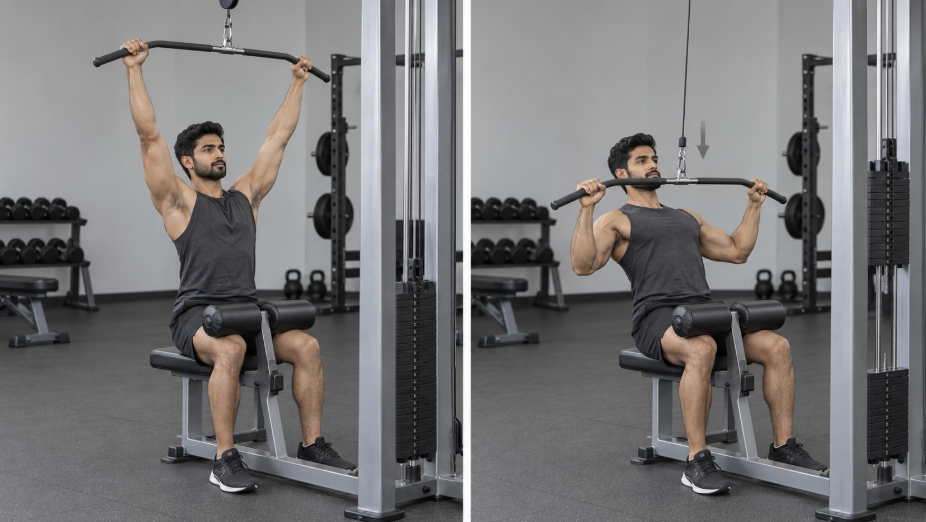
Targets: Latissimus dorsi, teres major, rear delts, biceps.
Why it is here: The most accessible vertical pull for all levels. Allows you to adjust the load precisely and build lat width before progressing to bodyweight pull-ups.
How to do it: Thighs locked under pads, grip just outside shoulder width. Pull to upper chest, elbows drive down and back. Control the return. No momentum.
Sets and reps: 3 to 4 sets of 10 to 12 reps. Keep the last rep challenging but technically clean.
Dumbbell swap: Single-arm dumbbell pullover lying on a bench.
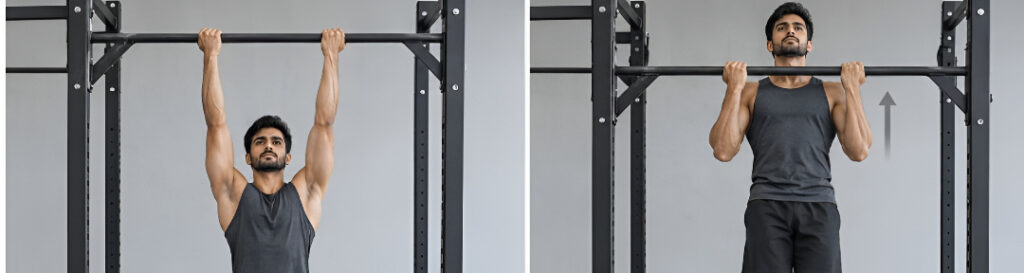
2. Pull-Up and Chin-Up
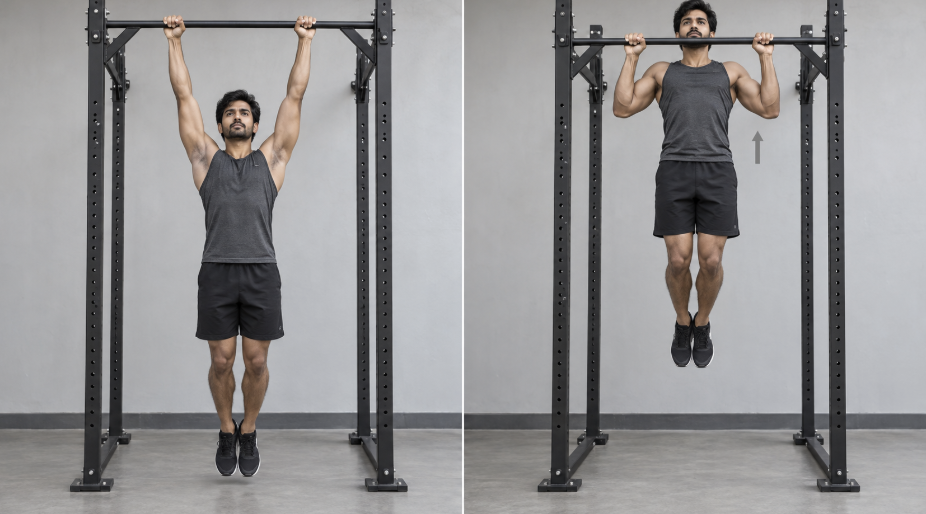
Targets: Lats, rhomboids, teres major, biceps.
Why it is here: The best bodyweight vertical pull for building width and grip strength together. Chin-up (underhand grip) gives more bicep involvement. Pull-up (overhand) hits the lats harder.
How to do it: Hang with full arm extension. Pull shoulder blades down first. Drive elbows toward hips until your chin clears the bar. Lower slowly. Use an assisted machine if needed.
Sets and reps: 3 sets of 6 to 10 reps, or to controlled failure.
Dumbbell swap: Lat pulldown with underhand grip.
3. Straight-Arm Pulldown
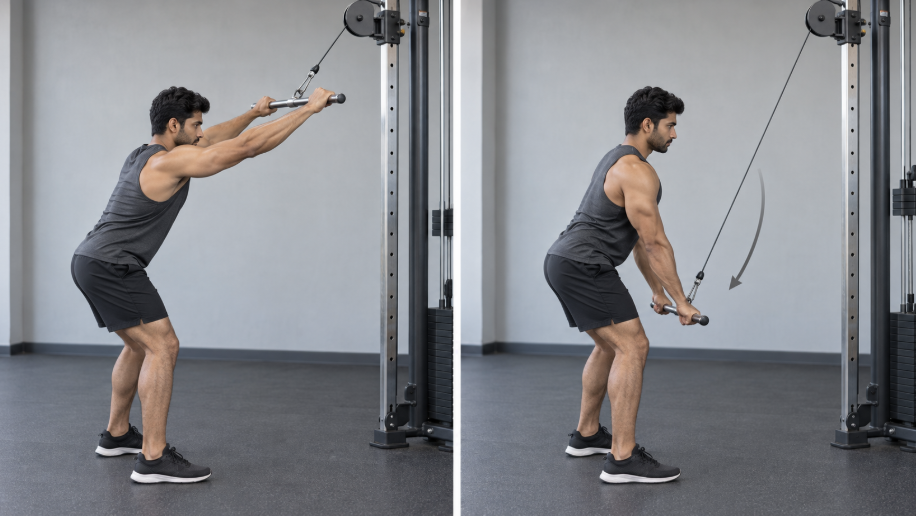
Targets: Lats, teres major, long head of triceps.
Why it is here: Isolates the lats without bicep involvement. Useful as a finisher or for building the mind-muscle connection before heavier work.
How to do it: Stand at a cable machine with a straight bar or rope. Keep arms almost straight, a slight bend only. Pull the bar from eye level down to your thighs in an arc. Squeeze your lats hard at the bottom.
Sets and reps: 3 sets of 12 to 15 reps.
Dumbbell swap: Dumbbell pullover flat on a bench.
Horizontal Pulls (Thickness and Mid-Back)
4. Barbell Bent-Over Row
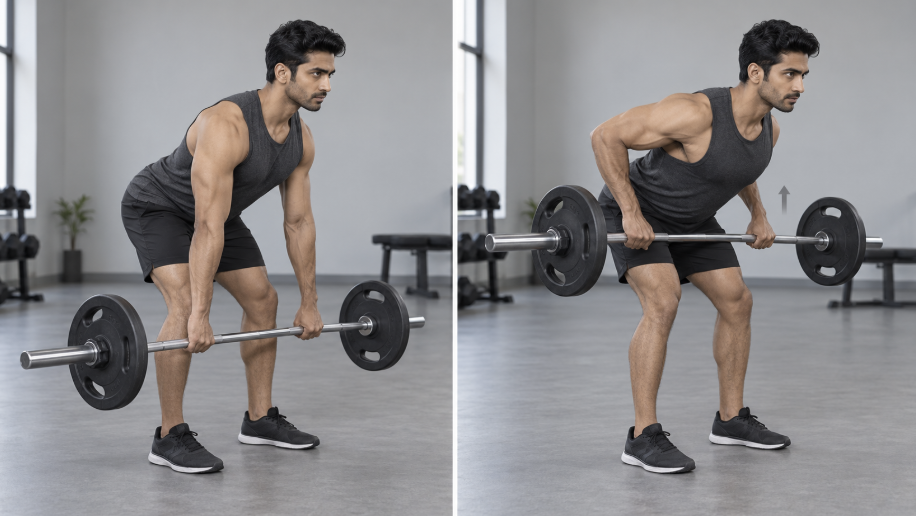
Targets: Rhomboids, mid-traps, lats, rear delts, erectors.
Why it is here: The best loadable horizontal pull for building overall back thickness. Heavier than any cable row and trains your erectors under load at the same time.
How to do it: Hinge at the hips until your torso is roughly 45 degrees. Keep your back flat and your core braced. Pull the bar toward your lower chest. Drive your elbows back and squeeze your shoulder blades together at the top. Do not jerk or use momentum to lift the bar. Rowing exercises are one of the most effective ways to train the lats and mid-back together.
Sets and reps: 3 to 4 sets of 6 to 10 reps. Go heavier here than on any isolation move.
Dumbbell swap: Two-arm dumbbell row braced against an incline bench.
5. Seated Cable Row
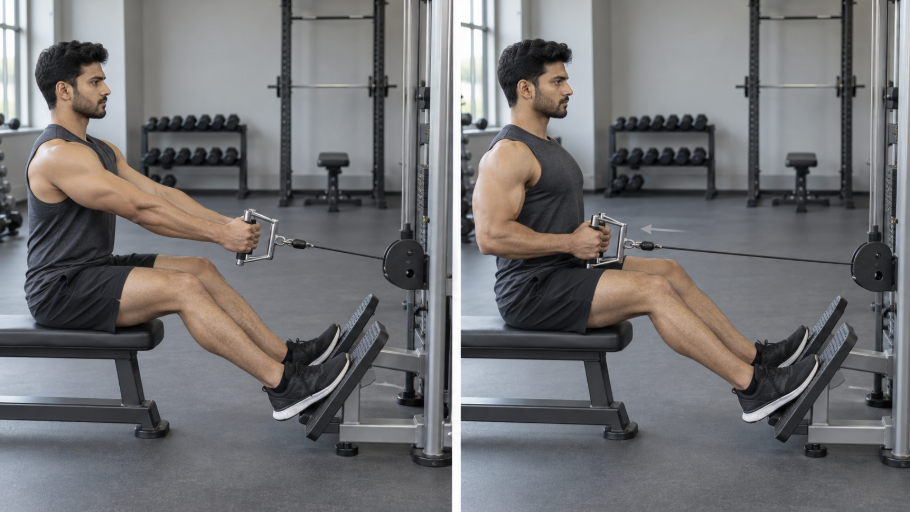
Targets: Rhomboids, mid-traps, lats, rear delts, biceps.
Why it is here: Constant cable tension through the full range of motion. Better stretch at the start position than a barbell row, which makes it ideal for mid-back detail work.
How to do it: Sit upright, feet on the platform. Pull the handle to your lower abdomen. Drive elbows back and squeeze shoulder blades at the end. Return slowly with a full stretch at the start of each rep.
Sets and reps: 3 to 4 sets of 10 to 12 reps.
Dumbbell swap: Two dumbbell rows on a flat bench.
6. T-Bar Row
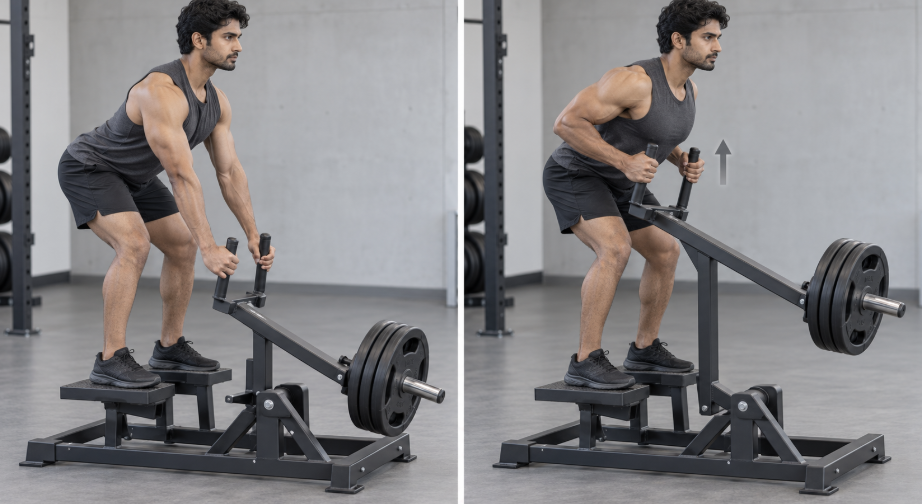
Targets: Lats, rhomboids, mid-traps, lower traps, biceps.
Why it is here: Allows heavier loading than most cable rows with a neutral grip that is easier on the wrists.
How to do it: Stand on the platform, hinge forward with a flat back. Pull the handle to your upper abdomen and squeeze at the top. Do not round your back as weight increases.
Sets and reps: 3 sets of 8 to 12 reps.
Dumbbell swap: Single-arm dumbbell row on a bench.
7. Single-Arm Dumbbell Row
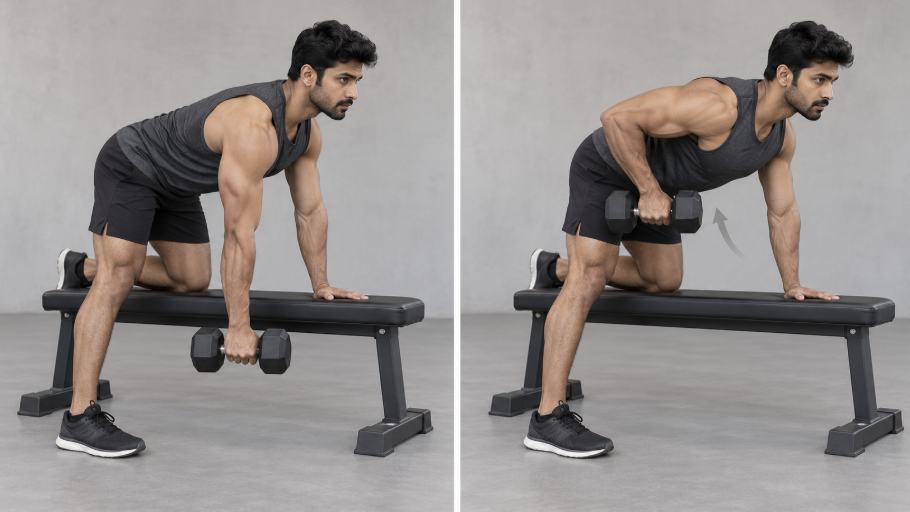
Targets: Lats, rhomboids, rear delts, biceps.
Why it is here: Trains each side independently and allows a longer range of motion than bilateral rows.
How to do it: Place one knee and hand on a flat bench for support. Pull the dumbbell from a full hang up to your hip, not your shoulder. Keep your elbow close to your body. Lower slowly and let the shoulder blade protract at the bottom before each rep.
Sets and reps: 3 sets of 10 to 12 reps each side.
Dumbbell swap: Use a cable low pulley for the same movement pattern.
Hinge (Whole Posterior Chain)
8. Deadlift
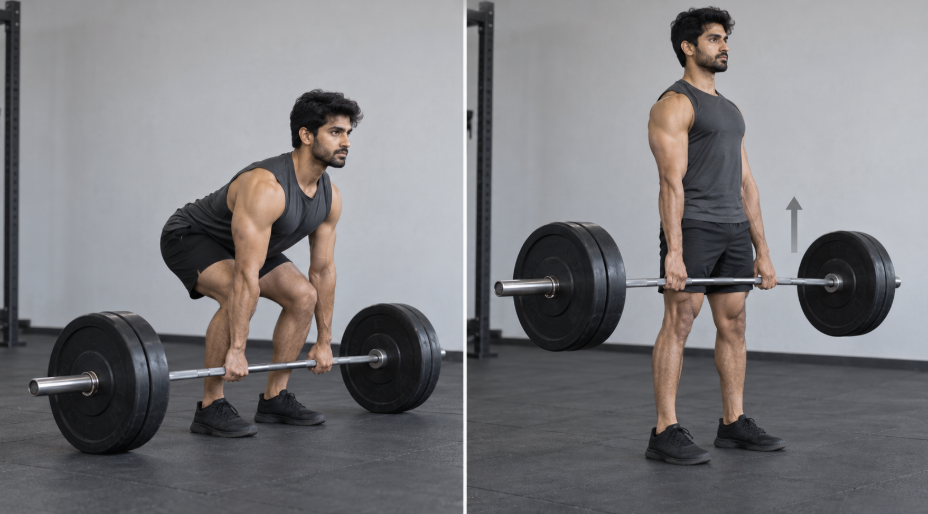
Targets: Lats, erector spinae, traps, glutes, hamstrings, quads.
Why it is here: The heaviest compound movement available. Trains the entire posterior chain in one lift and builds the kind of thickness and density no isolation exercise can match.
How to do it: Bar over mid-foot. Grip just outside your shins. Engage your lats, drive feet through the floor, extend hips as the bar passes your knees. Lock out at the top. Never round your lower back. Build weight gradually.
Sets and reps: 3 to 4 sets of 4 to 6 reps. Place this first in your session while you are freshest.
Dumbbell swap: Romanian deadlift with dumbbells for lower back and hamstring focus.
Detail and Health Exercises
9. Face Pull
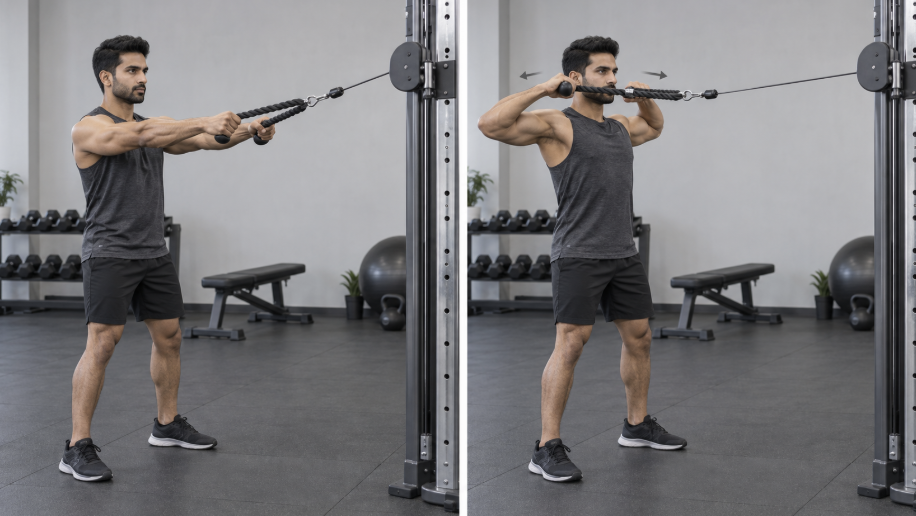
Targets: Rear delts, external rotators, upper traps, rhomboids.
Why it is here: Trains the rear delts and external rotators that rows and pulldowns miss. Counteracts internal rotation from heavy pressing and protects shoulder health.
How to do it: Cable at upper-chest height with a rope. Pull toward your face, splitting the rope so hands end up beside your ears. Elbows stay high. Squeeze rear delts and hold for one second.
Sets and reps: 3 sets of 15 to 20 reps with a lighter, controlled load.
Dumbbell swap: Bent-over dumbbell lateral raise with a slight forward torso lean.
10. Back Extension
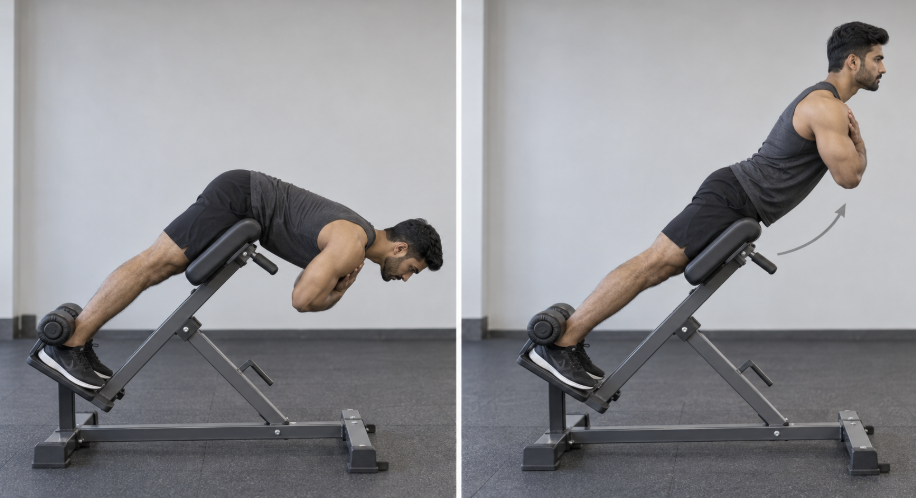
Targets: Erector spinae, glutes, hamstrings.
Why it is here: Directly trains the lower back, which assists every heavy pull but is rarely isolated.
How to do it: Lock feet in the machine. Lower your torso toward the floor with a flat back. Raise back to parallel. Do not hyperextend at the top. Add a plate to your chest as bodyweight becomes easy.
Sets and reps: 3 sets of 12 to 15 reps.
Dumbbell swap: Superman holds on the floor for lower back with no equipment available.
Sample Back-Day Routines
Beginner Back Day
Focus on machines and cables. Keep technique clean before loading up.
| Exercise | Sets x Reps | Rest |
|---|---|---|
| Lat Pulldown | 3 x 10 to 12 | 90 sec |
| Seated Cable Row | 3 x 10 to 12 | 90 sec |
| Single-Arm Dumbbell Row | 3 x 10 each | 60 sec |
| Back Extension | 3 x 12 to 15 | 60 sec |
Intermediate Back Day (Mass Focus)
Compound movements first, detail work at the end.
| Exercise | Sets x Reps | Rest |
|---|---|---|
| Deadlift | 4 x 4 to 6 | 3 min |
| Barbell Bent-Over Row | 3 x 6 to 10 | 2 min |
| Pull-Up or Lat Pulldown | 3 x 8 to 10 | 90 sec |
| T-Bar Row | 3 x 8 to 12 | 90 sec |
| Straight-Arm Pulldown | 3 x 12 to 15 | 60 sec |
| Face Pull | 3 x 15 to 20 | 60 sec |
If you train Push/Pull/Legs, your back sessions fall on pull days alongside biceps. If you train a traditional split, a dedicated back day works well once or twice per week.
How to Program: Sets, Reps, Frequency, and Recovery
How Many Sets Per Week
Aim for 10 to 20 weekly sets for the back total. Research by Schoenfeld et al. (2017, PMID 27433992) found that higher weekly training volumes produce significantly more muscle growth than lower volumes. The beginner routine above gives you 12 sets. The intermediate routine gives you 19. Both sit within the effective range.
Reps and Load
Use 8 to 12 reps for most rows and pulldown variations. This rep range consistently produces hypertrophy when sets are taken close to failure. Use 4 to 6 reps for deadlifts and heavy barbell rows where strength is the driver. Heavier loads on compound movements build the density that higher-rep isolation work cannot replicate on its own.
Frequency and Recovery
Train back 1 to 2 times per week with at least 48 hours between sessions. Muscle is built during recovery. Two sessions per week beats one for most intermediate lifters when volume is spread evenly.
Progressive Overload
Progressive overload means making training harder over time by adding weight, reps, or reducing rest. Without it, your back adapts and stops growing. Add a small amount of weight or one extra rep every 1 to 2 weeks.
Recovery and Nutrition for Back Growth
The back is one of the largest muscle groups in the body. What you eat and how you recover between sessions matters as much as the session itself.
Protein is the most important nutritional factor. The ISSN Position Stand (Jager et al., 2017, PMID 28642676) recommends 1.4 to 2.0g of protein per kg of bodyweight per day for muscle gain. For a 75 kg person, that is 105 to 150g per day. Most Indian vegetarian diets fall 20 to 40g short of this target even when meals are planned well.
To close that gap, see MuscleBlaze’s guide to the best whey protein in India. Creatine also supports strength on heavy pulls — MuscleBlaze’s creatine guide explains how to use it alongside training. Supplements fill gaps, not foundations.
Save this routine and run the beginner or intermediate back day at your next session. If you are consistently falling short on your daily protein target after training, a scoop of MuscleBlaze whey is the simplest way to close the gap. See MuscleBlaze’s guide to the best whey protein in India for the right pick for your goal.